Tuesday, 19 November 2019

Study Music - November 20

I once heard a radio presenter say she suspected Dmitri Shostakovich always had his tongue firmly planted in his cheek when composing. I was gobsmacked. I can think of no other composer capable of presenting such unrelenting pain, anger and suffering than Shostakovich. That can make him hard to listen to at times, I don't listen to his string quartets regularly, but it also makes for some amazing music.

His second piano trio is one of my favourite pieces. It delivers pain absolutely, there is great sorrow in it, especially in the haunting violin refrain in the opening and closing movements, but it is always moving. Some of the string quartets become whirlpools of sadness that drag you into the dark, this piano trio gives you no time for such morbidity. It is more like a cold river, pulling you on, sometimes slower sometimes faster, even bouncing you over rapids, but always forwards. It is not a happy river, but it is beautiful.


I discovered it years ago on an old Naxos album, but I was very excited today when I found it's included in the Seraphim Trio's monumental new release Trio Through Time on the ABC Classic label. Their playing is superb, lending just the right amount of energy to each phase of the river with the crystal clarity of clear, flowing water - hats off to the sound engineer as well. I look forward to listening to more of this extensive recording.

Wednesday, 16 October 2019

Study Music 17 October

Through a range of links I clicked on Spotify to follow random curiosities I landed on an album of music for clarinet performed by Evgeni Petrov. Before getting to the music, I have to say it was not his album alone; every piece features Tatiana Tarasevich on piano. I know there's a view that the piano part is "accompaniment" but the works do not work without it. I've seen albums that acknowledge the "accompanist" on the cover and frame them as duos, and I think that is a more accurate representation than this -


The album was bookended by Bizet's Carmen, which sounds strange but really isn't. The first piece is Fantasie Brilliant on the themes of the opera Carmen by Bizet, a long title, and was arranged by Francois Borne. It's a lovely trip through all the themes, as it says, and reminds me of Liszt rewriting whole operas and symphonies for solo piano concert pieces. At the other end is Alexander Rosenblatt's version with the slightly shorter title Fantasie on the themes from the opera Carmen by Bizet. It's short and livelier too and a great way to round off the album.

Camille Saint-Saens' clarinet sonata is the meat in the sandwich. I don't know that it's going to become a favourite of mine but it does demonstrate the highs and lows of the clarinet as it goes through most, if not all, of its register. The slow movement didn't quite do it for me, but the two allegros were fun.

As condiments there were also some other pieces. Debussy's Premiere rhaspsodie which was indeed rhapsodic and a good listen; and Ravel's Pavane pour une infante defunte, arranged by Petrov himself it was still a ho-hum number for me, it's either too maudlin or just lack-lustre in my mind, although I think there are some exceptional performances of it about. Maybe it's just the typical translation of the title that puts me off: Pavane for a Dead Infant.

A final dash of spice came in the form of a miniature by Alexander Ilyinsky called Butterfly. It does indeed float and flap and dance along and, together with Rosenblatt's Carmen fantasy, was the real highlights of what is a solid, nice album, if not a humdinger.

Tuesday, 8 October 2019

Study Music 9 October

Apologies for not posting for a couple of months, I'm sure you've all missed me :)

Today I decided I wanted to listen to Ferde Grofe's Grand Canyon Suite. I didn't realise how many recordings there are of it but I went for the one I know and own the Bournemouth Symphony Orchestra's 1999 album under the baton of William Stromberg. This album also includes the Mississippi and Niagra Falls suites.

Grofe's suites are a collection of orchestral pictures or musical postcards from each place. The music is highly evocative and uses unusual instrumentation to capture the listener's imagination. There are butterflies dancing to the rising sun in the first movement of the Grand Canyon suite. The third movement is my favourite, On the Trail, and you can clearly hear and see the donkey clomping along, taking its own sweet time and generally enjoying life.

Perhaps the most dramatic image is, understandably, The Power of Niagra, which brings that suite and this album to a close. The music is powerful and loud, featuring almost discordant alarm sirens. The beauty of nature brings a force to bear we must be wary of or we'll be swept away.

I followed this with Grofe's Piano Concerto, which I'd never heard before, performed by Jesus Maria Sanroma and the Rochester Philharmonic Orchestra and conducted by Grofe himself. In parts it is a typical early 20th century Romantic piano concerto with the sweeping sweetness of Rachmaninoff's second, but against that it has the competing melodies Grofe employs. I found these distracting and I'm a bit over the polished grandeur of late Romantic concertos, so while I found it nice, it's not a piece I'll be returning to.

Wednesday, 31 July 2019

Study Music 31 July

On a recommendation from the Shadow Sister*, I looked up Vasily Kalinnikov on Spotify. The name rang a vague bell which I managed to trace in my mind to a free sample track I received a few years back from Naxos. I recalled it was from a symphony so I wanted to find it. As it turns out, most of the albums of Kalinnikov, on Spotify at least, are of his first two symphonies. Unsure which to choose I went with the most recent, a 2011 recording by the Malaysian Philharmonic Orchestra under the baton of Kees Bakels.


From the opening few bars I knew I was in for something special. The opening movement of Symphony No 1 is amazing, drama-galore in the best late Romantic/Russian style. It sweeps you up and leaves you wanting more, then you're given an andante second movement which does not disappoint, swoon-worthy without being overly slow or saccharine. The third movement regains the momentum, but ends awkwardly, it was the only downside to the whole piece. I'll have to listen to some of the other versions to see if it's a tricky bit in the score or just a weird bit in the score. Either way, the moment of "what was that?" is very brief as the fourth movement launches you back into the world of the first, giving the symphony a lovely circular structure. I already have a lot of favourite symphonies and now I have another one.

The second symphony is really good too but didn't catch me up the way the first one did. I'm sure Kalinnikov wrote more, I shall have to find it. Thank you Shadow Sister :)


* So named because she's my sister and she represents shadows the way I do the Giant Squid, which I suppose makes me the Squid Brother but that's not so catchy - the Krakenite Sibling perhaps, yes that has a ring to it.

Tuesday, 23 July 2019

Study Music 24 July

Speaking yesterday of people who deserve more recognition, today I decided to listen to Louise Farrenc who is becoming one of my firm favourite composers. She was a French pianist and composer in the 19th century and had a good reputation in her lifetime, mostly for piano works. I love her larger works though. Her symphonies are grand and so is her chamber music. Today I went with her Piano Quintets No 1 and 2 performed by Quintetto Bottesini. Her mastery and love of the piano is clear, it dances around and drives the rest of the instruments along beautifully. The others are not forgotten however and all have their moments to shine.


The Romantic period is probably my favourite, and this music captures its very essence, on the brighter side. It is optimistic and dramatic, bubbly without being airy, strong but not demanding. Farrenc's music is full of energy and I encourage everyone to listen to it more often.

Study Music 23 July

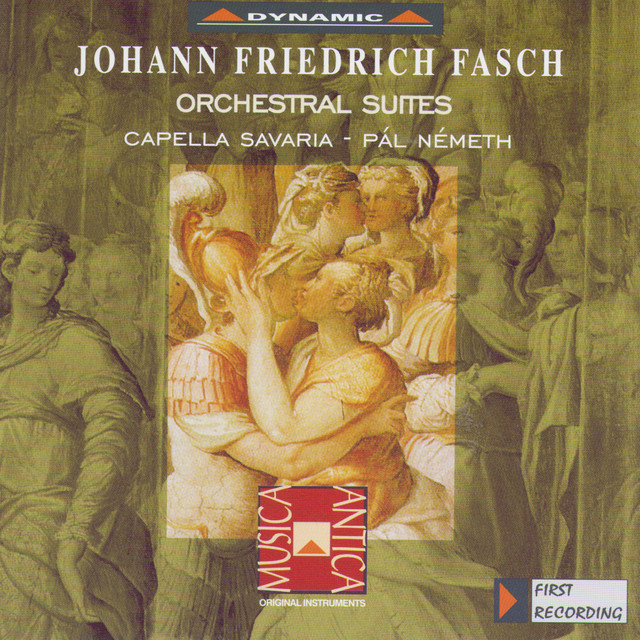
Deciding somewhat at random, I started this week's study music with a set of Orchestral Suites by J.F. Fasch, a German composer from the Baroque period, performed by Capella Savaria under the baton of Pal Nemeth. It's a 1999 recording you can find on Spotify. I can't fault the music, it was pleasant and well played, but it didn't really stand out either. One Air was delightful and there was a fun Gavotte but generally I found it a good album of background music - ideal for studying really.


Following that I had a look at the "Fans also like" page on Fasch's Spotify and selected Alessandro Marcello who I know of because of his famous Oboe Concerto in D minor. The adagio from that is one of the constants on classical music compilations, you may not realise you know it, but you probably do. So I wanted to hear something else of his. Being Spotify, there were limited options, seriously, don't ever think it has everything, but there were several recordings of his 'La Cetra' concertos so I decided to listen to one of them. They're a set of six violin concertos so I chose the recording that added another violin concerto on the end instead of the famous oboe one.


It's an older recording, 1995, with Simon Standage as soloist and director of the Collegium Musicum 90. Again, there was little to distinguish any of the concertos from each other - fair enough in a set - however, the music overall was lively and sparkling. I think Marcello deserves a bit more recognition, but then, so do a lot of people.

So today was a Baroque heading to Classical kind of day, no major stand-outs but plenty of good music.

Sunday, 2 June 2019

Study Music 27 May

I caught a bit of a symphony by Franz Berwald on the radio last week and decided to listen to some in full, so I started this week's listening with a 2013 recording of his third and fourth symphonies performed by the Berliner Philharmoniker conducted by Igor Markevitch. The fourth is first on the album, it's known as the Sinfonie naive, and is a joyous piece that felt like some mix of classical and romantic, which makes sense since that's when he was writing. The third, the Sinfonie singuliere, is a more dramatic work but just as good. Berwald makes full use of the orchestra, with blazing brass rising above the strings at times and the woodwind working away to build the glorious sound. He also goes against expectation, having phrases build then denying the typical climax, to put the listener back into the depths of the music again before lifting them back to the heights.

Wednesday, 10 April 2019

Study Music April 11, 2019

Today I'm trying a new composer, for me, Sir Hamilton Harty, an Irish composer from the early 20th century. The album opens with his tone poem 'With the Wild Geese' which has you soaring, diving and swimming with occasional fights against the elements. It turns out, the work is prefaced by two poems by Emily Lawless, one about an Irish regiment fighting the French in the 18th century and one about the ghosts of fallen soldiers, so the moods evoked by my images of geese over bonnie Ireland were not what Harty was going for. Either way, the music is beautiful.

The short fantasy 'In Ireland' comes next and is a happy ditty that also soars, with far fewer dives.

The main piece on the album is Harty's 'Irish Symphony' and it certainly lives up to the name. Its four distinct movements take us once again soaring and diving, but in a pleasurable flight over Ireland, both its geography and its iconography. The beauty of land, the dances of its people, the richness of its culture. Its all there in what is a remarkable and delightful symphony.

Following this discovery I turned to one of my favourite composers, the tragically undervalued Ippolitov-Ivanov, and his first symphony. I hadn't heard his symphony before so it was exciting to find it. It is brilliant, especially the sorrowful third movement and the cathartic joy of the fourth, but it feels a bit more formal than his other works. It's as if here he forced himself to conform to more classical notions and lost some of the ethereal beauty and evocative phrases I love in his shorter works. Not entirely, the very structure is a break from the "classical" symphony, and it is a beautiful work, just not as good, in my mind, as his sketches and fragments.

The recording, a 2015 album by the Singapore Symphony Orchestra conducted by Hoey Choo, follows the symphony with one such set of shorter pieces, the Turkish Fragments. There are four fragments: A Caravan; At Rest; The Night; and At the Festival, and each is highly evocative. I prefer an older recording by the USSR Symphony Orchestra which captured the mood that much more - you can hear the winds around the caravan - but this was still a good piece of work. The album closes out with Turkish March, which usually follows the fragments. Ippolitov-Ivanov wrote some good marches, so if you like marches look them up. There's also the Jubilee March and the Georgian March which is the last piece in the second set of Caucasian Sketches.

Wednesday, 20 February 2019

Study Music - 21 February 2019

For today's listening I turned to Anton Arensky. Initially I was looking for a concerto, but the most recent release (in fact the two most recent releases) was of his two piano trios, so how could I go past them? I picked the most recent, performed by Trio Carducci. Why was I looking for Arensky? Who is he? Good questions, which I would follow by why isn't he better known? Anton Arensky was a Russian composer who came between Rimsky-Korsakov (his teacher) and Rachmaninoff (his student). He is best known for his short pieces for solo piano, but that is a crime. His piano concerto is magnificent and, personally I prefer it to Rachmaninoff's (hear the howls of heresy).


So, his piano trios? Not as brilliant as the concerto, but still damn fine pieces of music. They're strong for chamber music, and the performance here is powerful, you lack nothing for fewer instruments than an orchestra here, but they can still bring in the appropriate pathos in the slower movements. There is a wonderful use of the three instruments in concert, they really work together here to produce that strong sound.

If you have Spotify you can check them out yourself here.

Thursday, 7 February 2019

Study Music - 8 February 2019

Opening this morning's listening, Music Antiqua Koln with a selection of German Chamber Music Before Bach (which is the album title funnily enough). It is mostly a collection of Sonatas, which meant something a little different in these early Baroque times to the more famous idea of a Sonata in Classical and Romantic periods. There is some ephemeral quality missing in these pieces, I'm sure musicologists don't find it so hard to define, but for me it's the stamp of JS Bach. That absence is not a lack however, it may even be a boon as the composers were not moulded by one man's genius and influence into something else but were what they were.

The sonatas are beautiful, I particularly love the one by Buxtehude who has over the past few years become a favourite early composer of mine. An exciting discovery for me though is Johann Paul Von Westhoff's Sonata 'La guerra', which has more movements than any of the others on the album, but they're all quite short. Each movement is very distinct in mood and the piece overall is a musical journey I hope to take again.

The last third of the album is devoted to Pachabel, the man who wrote that blasted Canon that eclipsed all the other work he did, which was a lot. Music Antiqua Koln sets some of that right with this recording of his Partie (Suite) in G, which surely rivals any suite Bach wrote. It is a sweet suite, rich in texture and tone, and nothing like the (in)famous Canon - which immediately follows it on this recording. It is a lively and swift rendition, much better than those slow schmaltzy ones that have made it as hated as it is loved. In fact, this version of the Canon may help you fall back in love with what is, after all, a very good piece of music. And, of course, being a decent group and great album, after the Canon comes the Gigue - they were written as a pair - and the Gigue is wonderful.

Inspired by Westhoff's La guerra sonata I looked for more of his music for the next album to listen to. I found a recording of a set of six Solo Partitas for violin performed by Gunar Letzbor. It was a good album, I enjoyed the music but it did drift into the background (which is good when studying of course). Two movements did stand out, a Sarabande from the Partita in A minor was the best, very emotive, and I added it to my Swoon playlist - not something that usually happens to Sarabandes. The other was the final movement on the whole album, a Gigue in D. Apparently I like Gigues.

Thursday, 17 January 2019

Study Music - January 18

Having heard a bit of his clarinet quintet on ABC Classic FM on the drive to work, I decided I'd listen to Mozart's Clarinet Concerto first today. It's a long-time favourite of mine and it's been a while since I listened to the whole thing. So I did a search on Spotify to pick a version. Too many options, but I couldn't go past Sabine Meyer with the Berliner Philharmoniker conducted by Claudio Abbado. It's a 1999 recording, which I refuse to admit was 20 years ago.

The recording is crisp and clear, as is Meyer's playing which breathes life into the phrases so they aren't simply demonstrations of her virtuosity, but vivid expressions of life and joy. This empathetic playing is even more realised in the next piece on the album, Debussy's Premiere Rhapsodie. This was a new piece for me but recalled some of Debussy's more ethereal moods. Which flowed nicely to the last piece on the album Toru Takemitsu's Fantasma/Cantos, a truly ethereal piece conjuring a dreamlike world of mists and hidden creatures, wonders and dangers.

In all the album, named as a list of the works on it, is a great example of Meyer's brilliance - and that of the Berliner Phil - and a delightful listen in general. Highly recommended.

Inspired by the Fantasma/Cantos I went to Takemitsu's page on Spotify and found there are several albums of his complete piano works. I went with the most recent, recorded last year, featuring the playing of Lukas Huisman. As soon as I hit play I was in unfamiliar territory. Short phrases, rising and falling, stillness in the motion. Often when I've heard something like it there's been troubled emotion beneath the music - the despair and anger of Shostakovich for example - but here it wasn't so. Trouble yes, perhaps even sorrow at times, but only times. More, it seemed to be the vibrations of life. The rain breaking the surface of the water, the movements breaking the stillness of a body at rest. It is that moment, the one between stillness and breath, that Takemitsu's music captures. For me at any rate. I can't say it's a lulling place, quite the opposite, but not stirring either. It is a beauty of which I am completely unaware, although I recall a philosopher, Lyotard I think, saying that it is in the moment of something happening, after it hasn't but before it has past, that isolated moment of pure action and existence that is the sublime.

Sunday, 13 January 2019

Today's Study Music - January 14

Hello, this year I plan on sharing a little on what music I'm listening to while studying. Brief album reviews basically.

Today I face the choice of which album I want to download from the Naxos Newsletter this month. There are three options every month from the considerable catalogue Naxos has grown over the years. Sometimes I find the choice straightforward, but today I'm listening to two of them before I decide.

The first is a 1990 recording of Famous Operetta Overtures by J. Strauss Jr, Offenbach and Suppe, performed by the Czecho-Slovak State Philharmonic Orchestra conducted by Alfred Walter. It opens with Strauss's Die Fledermaus, which I'd always assumed meant The Field-mouse, but apparently means The Bat, so there's a childhood image shattered. The music is as lively and enjoyable as ever though and sets the tone for the rest of the album.

Operetta, being a light form of opera, has wonderful overtures of vim and vitality, and jolly brass to match the rollicking strings. The music can be wonderfully evocative too of course, as the opening of The Gypsy Baron shows with its images of romantic intrigue and cloaked anti-heroes. Naturally, Suppe's Light Cavalry Overture is included and given a typically thrilling rendition, although I think I have heard stronger ones. The album ends with Offenbach's overture to Orpheus in the Underworld, featuring the famous can-can, which is a deserving conclusion to the music.

The second choice is The Art of the Vienna Horn, part of a series of albums featuring soloists from the Vienna Phil, in this instance Wolfgang Tomboeck. Apparently the Vienna horn was a precursor of the double horn, but because of its distinctive sound the Vienna Philharmonic have kept it, particularly for works by Bruchner, Brahms and others who wrote specifically for it.

The album opens with Beethoven's Horn Sonata, Op 17, gives us a Schubert lieder, then a horn/piano duet by Schumann, and ends with a Trio for Piano, Horn and Violin by Brahms. The Vienna horn seemed to me more muted than most brass and this gave the music a damper touch. It felt like I was listening to Romantic-era chamber music (as I was) through a hollow tree. There was something green and earthy there, but also removed and vaguely dissonant. Or perhaps that's my protracted mind listening to something while hot, tired and reading about imperial historiography.

So which to get? Despite the former album's energy and my nostalgia for an overture that has nothing to do with field mice except in my mind, I'm going to download The Art of the Vienna Horn. The music is less familiar, less commonly played, and I feel deserves further listening to appreciate its subtleties and beauty that may have been tarnished by distraction.

Monday, 23 July 2018

Snowmelt - Zoe Keating's New EP - a review


The opening chords of Zoe Keating's new ep evoke a stark icy landscape. This rapidly is broken up by rocks, then the life beneath emerging in a spring thaw. And this is just the beginning. Snowmelt is Keating's first new music in a few years, and comes with the byline, four songs for the end of a long winter, and the winter is definitely more than seasonal.

Zoe has been to the barren frozen lands of grief, even without knowing about her life, the sorrows of Icefloe, the second track, can only be created by someone who has spent time there. The tracks don't try to brush this off; a stay in such a place leaves permanent marks, but the music is a journey back through the tundra to the forests where I met Zoe on her last solo album (Into the Trees, 2010).

Touched, remembering, but alive and ready to continue the adventure. This is very clear in the deep, beating rhythms of Possible, the third song, which has flights of beauty over the resonating pulse; it is possible to escape the desert. The final track, Nix, is the relief of the end of the journey, the moment of rest before the next chapter begins.

In all, Snowmelt is a stunningly beautiful set of songs that gives solace and invites hope.

I listened to it on Bandcamp, it's also available on Spotify and iTunes.

Saturday, 23 June 2018

Listening to a cat bathing

As I drive I leave myself at the mercy of the radio presenters of ABC Classic FM. Little did I suspect Greta Bradman would make me listen to a cat bathing. Specifically, Hiroshige's cat, not a cat I know even. It was a wonderful experience, and I'll listen to it again.

Hiroshige's Cat Bathing is part of Alan Hovaness's Piano Sonata, Op 366, so it's not as weird as all that. It's a languorous piece, perfect for a Sunday morning, and oddly meticulous - so just like a cat bathing itself. 

So I highly recommend checking it out for two reasons. First because it is beautiful, and second so you can tell people you're listening to Hiroshige's Cat Bathing, just for the reaction.


Tuesday, 5 June 2018

Capriccio Dances

With the Classic 100 Dance countdown this weekend, I thought it was time to reveal my votes, for those who care about such things. It's at least a good chance to share some great music. As usual, the decision of which 10 pieces to vote for was horrendously difficult. Luckily, I left it till there were only two hours left to vote and I desperately needed to get to bed anyway, so my tiredness helped me make the difficult choices.

In the end, I had to ask myself, does that piece really make me move? And with some hard fought honesty I managed to cull such favourites as Ippolitov-Ivanov's Caucasian Sketches. What did make the cut then? Two I discussed in a recent post, Bizet's Farandole and Saint-Saens' Bacchanale. In a break from my usual rule of only one vote per composer I also voted for Saint-Saens' Danse Macabre, because, it's the freaking Danse Macabre okay and it really makes the bones dance.

Still specifically dance music, there was Borodin's Prince Igor for the Polovstian Dances which have been moving me since my early teens, particularly after I learnt one on the clarinet; Copland's Rodeo, which has dances like Hoedown and Buckaroo Holiday; and of course Dvorak's Slavonic Dances which are simply brilliant.

My other choices are not dances, but they do make me move when I hear them. Orff's Carmina Burana and Mussorgsky's Night on Bald Mountain are two of my all-time favourite works and they really do go off, as I do with some frenetic air-conducting.

The last two pieces I realised as I voted have particular significance to this blog, being the two capriccios which indirectly led me to the name: Tchaikovsky's Capriccio Itallien and Rimsky-Korsakov's Capriccio Espagnol. Both written by Romantic Russians thinking about Mediterranean countries, and both exciting romps that never fail to stir the feet to tap and the arms to swing, between softer moods of head swaying.

It was because of these two pieces that I one day decided to figure out what a capriccio was; in short it's a fantasy on a theme, not so much a musical theme but an idea, like Italy or Spain seen through Romantic Russian eyes. If not for these two works then, this blog may not exist. Here's hoping they do well in the countdown. And here's hoping it's a rollicking good selection of works sure to keep the blood flowing and the body moving.

Don't forget to listen, it's a great way to explore new music and enjoy old favourites.

Wednesday, 16 May 2018

Belated Synthesis Review - Sydney Opera House February 13, 2018

This review is very late, mostly because of an interstate move following hard on the heels of the concert, but also, as I discovered while writing it, sometimes it's hard to find the words to describe an amazing experience.


Rock bands teaming up with orchestras is nothing new. Even The Wiggles have done it, and I note Eskimo Joe is doing it later this year with the TSO, my new state orchestra. However, Evanescence has done something a bit different. Synthesis isn't a one-time collaboration with one orchestra, it is a Herculean tour where the band liaises with a new orchestra in every city it goes to. The organisers, and touring conductor Susie Seiter, probably deserve some sort of medal.

It's also more personal than the usual, ‘won't this sound good’ team-up. Amy Lee has revisited many of the band's songs and synthesised them with orchestral arrangements. The name of the album is more than apt, it is a literal description of itself. Old material in new ways, and new material with the old. That Lee was up for the challenge was evident; Evanescence has included string sections and choirs since its first album, and she has composed music for film in collaboration with Dave Eggar, who I'll talk more about in a moment.

Of course, every rock concert has a support act, and in this case its the respective orchestra, so before discussing Evanescence’s set I'll mention this. It was a smaller version of the SSO, with the addition of Sally Whitwell on piano and Dave Eggar on cello, and it was great to see them all having so much fun. The set opened with a little night music of Mozart’s, followed by some Moonlight by Beethoven. The latter was performed admirably by Sally Whitwell, with the orchestra, an unusual and novel treat for this most famous of piano sonatas. The arrangement was by Georgi Cherkin, a Bulgarian concert pianist I'll have to investigate further. It was also interesting to hear a version of Verdi’s Lacrymosa, from his Requiem, without a choir. The Lacrymosa is a clear influence on Amy Lee who references it in the front of her song of the same name. Indeed, the entire opening set was music Lee has mentioned as having an influence on her work, which added another personal dimension to the concert. The set concluded with Dave Eggar’s Rockstar cello performance of Bach in Black, which was as fun to watch as to listen too.

Once Lee walked onto the stage, in a stunning green gown, it was clear she had the presence to own the entire concert hall, but she never claimed it. This was a collaboration and her very demeanour allowed for the band and orchestra to share her spotlight. But when she sings, it’s a tricky thing not to be enamoured. Evanescence’s first album helped me through some dark times, and songs like Lithium from their second album did too. Part of the reason for that is the emotional integrity behind the music; Lee doesn’t sing of pain from some abstract idea or a desire to sound emo to be popular as a musician. Nor does her music whinge like some popular balladists seem to do these days. Her music is that of her soul, the pain is real, but she isn’t complaining, merely singing through the darkness, often finding light through the music. Hearing that, with orchestra, in person, was an experience I find difficult to describe. Perhaps that is why this review has taken so long to be written. And perhaps that’s why I have little more to say. In that concert hall with hundreds of other people, Amy Lee sang my darkness, and called to my light. Sounds ridiculous written like that, but it was a personal experience I can’t describe any other way.

To finish I’ll mention one other thing. It was great to see in this huge, rock meets classical event, three strong women in the key positions on the stage. Amy Lee, of course, Susie Seiter conducting the whole affair with aplomb, and Sally Whitwell, first as soloist in the orchestra’s set then playing piano in places where Lee usually does herself in performances without orchestra.

If a chance comes by to go to Synthesis, go – I realise that’s not likely any more. Give the album a whirl though. And go to live music events, there really is a difference to hearing recorded stuff. And keep exploring.

Tuesday, 1 May 2018

New Home and New Classic 100

So the Giant Squid has relocated to the Southern Ocean and I have moved to Tasmania to keep in touch - climate change affects us all and it's a good move. If you haven't heard by the way, Wandering Capriccio is now the musical appreciation tentacle of Giant Squid Creations.

Last year was a busy one for me personally, so this blog was very quiet as you may have noticed. What there was, was in relation to the wonderful Sydney Youth Orchestra which kindly invited me to attend the main concerts to review them here. I will miss that orchestra, and not much else about Sydney. If you are in the area, get to their concerts! 

Now I'm here I look forward to music from the TSO and Hobart Chamber Orchestra, and hopefully the Tasmanian Youth Orchestra too, which I'm sure rivals the Sydney one. All that is to come, when opportunity and finances allow.

For now, there's another Classic 100 beginning via ABC Classic FM. The topic this year is Dance - music that makes you move - and for the first time in a few years I'm actually excited about it. It's in the nomination stage at the moment and I'm working on my list as I write (Dvorak's 5 Prague Waltzes are playing and I'm erring on whether to put them in). 

My first thought was the Bacchanale from Saint-Saens' Samson and Delilah, although I confess I couldn't remember what it was called at the time. I know it from an ABC Classics release from years ago called The Dance of the Hours, and here's a fine performance of it for you by the Berliner Philharmoniker conducted by Gustavo Dudamel.


Next I had to nominate Bizet's Farandole from L'Arlesienne. That piece was on a Reader's Digest compilation I had in my teens and it's always stirred me to movement and inspired me generally. Here it is with Paavo Jarvi conducting the Paris Orchestra.


Of course, there are others I am nominating, some of which are obvious and others not so much, but I won't tie you down with the whole list here. What I might do is create a Spotify list with not just my nominations but pieces I like to move to that I know won't be in the countdown for one reason or another and I'll share that soon.

Until then, keep exploring, and dancing, in the world of music.

Saturday, 25 November 2017

SYO - The Masterworks

Last week I had the good fortune to attend Sydney Youth Orchestra’s third and final concert of the year, entitled The Masterworks, in Sydney Town Hall. As with the last concert, it was opened by the SYO Philharmonic presenting an overture by Wagner, this time the Rienzi. This was followed by Dvorak’s Cello Concerto in B minor and Brahms’ Fourth Symphony.

On the face of things, the Rienzi Overture is a curious choice for a concert called The Masterworks, as it comes from an early opera that is much less thought of than Wagner’s ‘masterpieces’. However, it is an impressive piece of work and bears all the traits that, to my mind, are characteristically Wagnerian. My own knowledge of the overture is interesting to note here too. In my late teens I bought many classical CDs sold in those wire bins department stores have for discount CDs and the like, including two collections of works by Wagner, who I then held as a favourite (blame Bugs Bunny and Elmer Fudd). I expected to have some overlap, probably from the Ring Cycle or Tannhäuser, but no, the only piece on both albums was the Rienzi Overture. So, even if the opera itself doesn’t do as well as Wagner’s later works, the overture remains a popular one for orchestras, and in the SYO Phil’s hands it was easy to see why.

Wagner is known for his use of themes, and for being grandiose, and the Rienzi Overture, in that sense, is very Wagnerian. The thing to remember is, for the grand moments to work, they must be balanced with sufficient pathos in between, and in those moments I think Wagner produced some of his best themes and thematic presentations. Working them in performance puts an orchestra to its limits, it must rise in subliminal glory, then sink back to gentle, without losing continuity or that Wagnerian vitality. The SYO Phil traversed the thematic shifts with aplomb, leaving us entranced and awed all at the right times. I always enjoy seeing the triangle come out in the percussion section, and I’m putting its role in this overture as the best triangle moment of the SYO’s concert year. That sounds trite, the triangle being the butt of so many jokes, but that’s why I love seeing it and hearing the extra effect it gives, which comes across more clearly in live performance.

Now, I’ve mentioned my love for Dvorak before, so I won’t go on about that here. The Cello Concerto was one of the first pieces of his I really knew – besides his ninth symphony of course – and his music’s place in my heart owes a lot to this. It was another of those discount albums that introduced it to me, I found it at the back of a Woolies in Bathurst … I know, weird, but clearly meant to be. It’s a very Bohemian work, not in the coloured skirts and crocheted ponchos sense you’ll find on Pinterest, but the style of classical music from Bohemia in the late 19th century sense. Like Smetana’s Ma Vlast (My Country), there is a strong evocation of the natural landscape of Bohemia; soaring mountains and dark forests, matched with fields and friendly villages abound in my listening to much ‘Bohemian’ music. There are passages in the Cello Concerto which also remind me of Dvorak’s symphonic poems which tell of dark and tragic Bohemian folk stories, with wild and malevolent beings ruining people’s lives, but in such beautiful folkloric ways.

This performance captured all of that. This was no doubt helped, not only by the skill and passion of the soloist, Umberto Clerici, but also his obvious rapport with the orchestra. Between solo passages Clerici not infrequently looked at and to members of the string section with encouraging nods and appreciative smiles. And the orchestra clearly responded, as, with Clerici, they evoked the fantastic forests and mountains within my imagination and thrilled me with the highs, and made me swoon with the slower passages.

As an encore, Umberto Clerici performed a piece by Giovanni Sollima, who I believe he said he is friends with. It was a shortened version of the piece ‘Alone’ and it was truly electric. I mean that in the way it was alive, and energetic, and liable to jump like lightning arcs in unexpected but utterly spectacular and completely natural ways. Clerici apparently recorded it for an album produced by ABC Classics, I’ll let you know more when I’ve tracked that down.


The final piece is one I can claim no prior knowledge of, which is a terrible oversight on my part. One thing it definitely is, is a great work to end The Masterworks on. Aside from one slow movement, it is all Allegro. It is energetic and full of passion – indeed the final movement is Allegro energico e passionata – and the orchestra rose to meet the demands of this thrilling score. It also features a number of solo moments that allowed members of the orchestra to shine and all who were called on to do so, did so with appropriate verve and skill. It was a fitting finale to both a great concert and a wonderful year for the SYO, I’m honoured to have witnessed the concerts. 

Monday, 7 August 2017

Ambition and Virtuosity

Ambition and Virtuosity was an apt name for SYO’s latest concert as the pieces selected were certainly ambitious and all require their own virtuosic performances.

The concert in Sydney Town Hall (August 5) was opened by the Sydney Youth Orchestra Philharmonic under the guidance of Brian Buggy OAM. If the SYO was the Australian XI, the SYO Philharmonic is Australia A, but there was little to tell them apart in quality. Brian Buggy, in his stylish velvet jacket, leaned into the performance, moving his body as much as the baton, as he guided the young musicians through the Act I Prelude to Wagner’s Mastersingers of Nuremberg.
Any Wagnerian work is monumental and this overture is no exception. It isn’t as dark perhaps as some of his more overtly emotional pieces, but his thematic phrasing and orchestration are as expertly rendered here as in any of his most celebrated compositions. And none of the epic sound or drama was lost in this performance, an impressive feat for such a young orchestra.

But the star turn was next, the SYO with Naoko Keatley performing Tchaikovsky’s Violin Concerto. Naoko stood out boldly against the orchestra, partly because of her bright blue dress against the black of the ensemble, but mostly because of her playing. It is a tricky work, full of the sort of romantic passion Tchaikovsky is famous for, and completely demanding of virtuosity, and Naoko did not falter. Her bow flew, her fingers were a blur, and we were all held in awe. When it was the orchestra’s turn and she had a chance to rest, you could see her in the music. She didn’t appear to be just listening and waiting for her turn, she was feeling it flow around and through her. Then when her turn came, it continued to flow through her and into us, the lucky audience.

None of which is to suggest that the orchestra was remotely lacking, quite the opposite. Like most great concertos, Tchaikovsky’s demands as much of the orchestra as the soloist, and only if they succeed can the soloist truly shine. The SYO met the challenge. The music weaved its magic seamlessly; there were none of the little wavers I noted in their last concert, and they showed that with diligence and enthusiasm, youth is no barrier to great orchestral performance.

This was even more evident in the final piece of the night Dvorak’s Seventh Symphony. This was an ideal selection for a youth orchestra as it gives every section, and many individuals, a chance to shine. It also capped off the night well, all three works come from the late Romantic period, but carry their composers’ distinctive styles, all of which pack a punch. Dvorak is a personal favourite of mine, so I went into this concert with excitement and trepidation at hearing one of his symphonies. I need not have been concerned.

The seventh has all of Dvorak’s range of moods, even if they don’t reach the extremes of the transcendent ninth (my all-time favourite symphony), and this is expressed through the instrumentation, which is what made it such a good showcase work for this talented orchestra. Full professional orchestras may provide more polish, but they don’t have school to attend.


Their ambition was high, but they had the virtuosity to reach their goal. Bravo SYO!

Saturday, 29 July 2017

Virtuosic Return


Wolfgang Amadeus Mozart wrote his first symphony when he was eight. It’s still played by world-class orchestras today. Naoko Keatley did not write a symphony when she was eight. She did, however, play Bach’s Concerto for Two Violins in her debut with the Sydney Youth Orchestra. That’s no easy feat. To get some idea of how impressive that is, watch this clip of adults playing it. 


Before leaving the orchestra after completing school, Naoko also premiered the Matthew Hindson Violin Concerto, a very different but no less challenging piece of music. Clearly there was talent aplenty, and a passion to match in this young girl. The following is a recording of Naoko playing the first movement of the Hindson concerto with the New Zealand Orchestra under her maiden name (Miyamoto). 


Scintillating, right?

Her dedication remained and after studying at the National Conservatorium of Music she pursued her career in England, becoming a young member of the London Symphony Orchestra. She also performs in the Royal Opera House Orchestra, the Royal Philharmonic Concert Orchestra and a modern group, Riot Ensemble.


But Naoko hasn’t forgotten her roots and returns to Australia to perform in the Australian World Orchestra whenever she can. Now she returns to where it all started, and will be the soloist in the Sydney Youth Orchestra’s performance of Tchaikovsky’s Violin Concerto, part of their Ambition and Virtuosity concert. Having such a talented and successful alumni playing with the orchestra must be inspiring, and a good chance to learn from someone the young musicians can look up to, and relate with.

Tchaikovsky’s Concerto is a virtuosic piece, full of energy and verve, so Naoko will need all her talent, dedication and passion to master it. Somehow, I think she will. I look forward to finding out.