Wednesday, 16 October 2019

Study Music 17 October

Through a range of links I clicked on Spotify to follow random curiosities I landed on an album of music for clarinet performed by Evgeni Petrov. Before getting to the music, I have to say it was not his album alone; every piece features Tatiana Tarasevich on piano. I know there's a view that the piano part is "accompaniment" but the works do not work without it. I've seen albums that acknowledge the "accompanist" on the cover and frame them as duos, and I think that is a more accurate representation than this -


The album was bookended by Bizet's Carmen, which sounds strange but really isn't. The first piece is Fantasie Brilliant on the themes of the opera Carmen by Bizet, a long title, and was arranged by Francois Borne. It's a lovely trip through all the themes, as it says, and reminds me of Liszt rewriting whole operas and symphonies for solo piano concert pieces. At the other end is Alexander Rosenblatt's version with the slightly shorter title Fantasie on the themes from the opera Carmen by Bizet. It's short and livelier too and a great way to round off the album.

Camille Saint-Saens' clarinet sonata is the meat in the sandwich. I don't know that it's going to become a favourite of mine but it does demonstrate the highs and lows of the clarinet as it goes through most, if not all, of its register. The slow movement didn't quite do it for me, but the two allegros were fun.

As condiments there were also some other pieces. Debussy's Premiere rhaspsodie which was indeed rhapsodic and a good listen; and Ravel's Pavane pour une infante defunte, arranged by Petrov himself it was still a ho-hum number for me, it's either too maudlin or just lack-lustre in my mind, although I think there are some exceptional performances of it about. Maybe it's just the typical translation of the title that puts me off: Pavane for a Dead Infant.

A final dash of spice came in the form of a miniature by Alexander Ilyinsky called Butterfly. It does indeed float and flap and dance along and, together with Rosenblatt's Carmen fantasy, was the real highlights of what is a solid, nice album, if not a humdinger.

Tuesday, 8 October 2019

Study Music 9 October

Apologies for not posting for a couple of months, I'm sure you've all missed me :)

Today I decided I wanted to listen to Ferde Grofe's Grand Canyon Suite. I didn't realise how many recordings there are of it but I went for the one I know and own the Bournemouth Symphony Orchestra's 1999 album under the baton of William Stromberg. This album also includes the Mississippi and Niagra Falls suites.

Grofe's suites are a collection of orchestral pictures or musical postcards from each place. The music is highly evocative and uses unusual instrumentation to capture the listener's imagination. There are butterflies dancing to the rising sun in the first movement of the Grand Canyon suite. The third movement is my favourite, On the Trail, and you can clearly hear and see the donkey clomping along, taking its own sweet time and generally enjoying life.

Perhaps the most dramatic image is, understandably, The Power of Niagra, which brings that suite and this album to a close. The music is powerful and loud, featuring almost discordant alarm sirens. The beauty of nature brings a force to bear we must be wary of or we'll be swept away.

I followed this with Grofe's Piano Concerto, which I'd never heard before, performed by Jesus Maria Sanroma and the Rochester Philharmonic Orchestra and conducted by Grofe himself. In parts it is a typical early 20th century Romantic piano concerto with the sweeping sweetness of Rachmaninoff's second, but against that it has the competing melodies Grofe employs. I found these distracting and I'm a bit over the polished grandeur of late Romantic concertos, so while I found it nice, it's not a piece I'll be returning to.

Wednesday, 31 July 2019

Study Music 31 July

On a recommendation from the Shadow Sister*, I looked up Vasily Kalinnikov on Spotify. The name rang a vague bell which I managed to trace in my mind to a free sample track I received a few years back from Naxos. I recalled it was from a symphony so I wanted to find it. As it turns out, most of the albums of Kalinnikov, on Spotify at least, are of his first two symphonies. Unsure which to choose I went with the most recent, a 2011 recording by the Malaysian Philharmonic Orchestra under the baton of Kees Bakels.


From the opening few bars I knew I was in for something special. The opening movement of Symphony No 1 is amazing, drama-galore in the best late Romantic/Russian style. It sweeps you up and leaves you wanting more, then you're given an andante second movement which does not disappoint, swoon-worthy without being overly slow or saccharine. The third movement regains the momentum, but ends awkwardly, it was the only downside to the whole piece. I'll have to listen to some of the other versions to see if it's a tricky bit in the score or just a weird bit in the score. Either way, the moment of "what was that?" is very brief as the fourth movement launches you back into the world of the first, giving the symphony a lovely circular structure. I already have a lot of favourite symphonies and now I have another one.

The second symphony is really good too but didn't catch me up the way the first one did. I'm sure Kalinnikov wrote more, I shall have to find it. Thank you Shadow Sister :)


* So named because she's my sister and she represents shadows the way I do the Giant Squid, which I suppose makes me the Squid Brother but that's not so catchy - the Krakenite Sibling perhaps, yes that has a ring to it.

Tuesday, 23 July 2019

Study Music 24 July

Speaking yesterday of people who deserve more recognition, today I decided to listen to Louise Farrenc who is becoming one of my firm favourite composers. She was a French pianist and composer in the 19th century and had a good reputation in her lifetime, mostly for piano works. I love her larger works though. Her symphonies are grand and so is her chamber music. Today I went with her Piano Quintets No 1 and 2 performed by Quintetto Bottesini. Her mastery and love of the piano is clear, it dances around and drives the rest of the instruments along beautifully. The others are not forgotten however and all have their moments to shine.


The Romantic period is probably my favourite, and this music captures its very essence, on the brighter side. It is optimistic and dramatic, bubbly without being airy, strong but not demanding. Farrenc's music is full of energy and I encourage everyone to listen to it more often.

Study Music 23 July

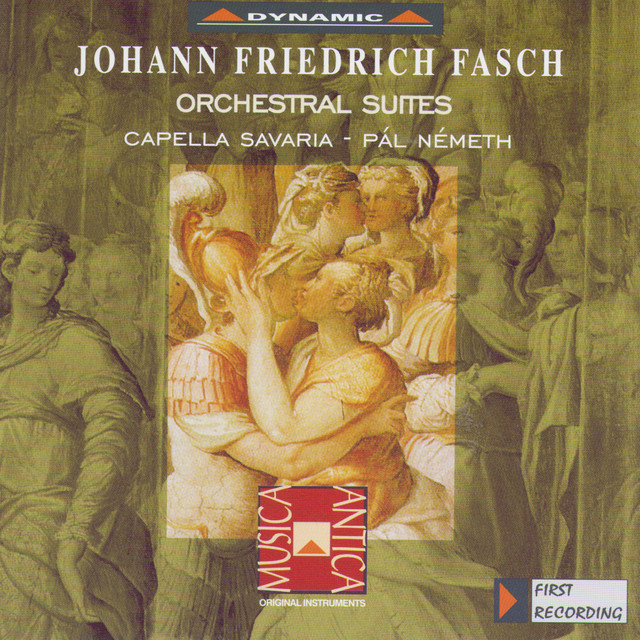
Deciding somewhat at random, I started this week's study music with a set of Orchestral Suites by J.F. Fasch, a German composer from the Baroque period, performed by Capella Savaria under the baton of Pal Nemeth. It's a 1999 recording you can find on Spotify. I can't fault the music, it was pleasant and well played, but it didn't really stand out either. One Air was delightful and there was a fun Gavotte but generally I found it a good album of background music - ideal for studying really.


Following that I had a look at the "Fans also like" page on Fasch's Spotify and selected Alessandro Marcello who I know of because of his famous Oboe Concerto in D minor. The adagio from that is one of the constants on classical music compilations, you may not realise you know it, but you probably do. So I wanted to hear something else of his. Being Spotify, there were limited options, seriously, don't ever think it has everything, but there were several recordings of his 'La Cetra' concertos so I decided to listen to one of them. They're a set of six violin concertos so I chose the recording that added another violin concerto on the end instead of the famous oboe one.


It's an older recording, 1995, with Simon Standage as soloist and director of the Collegium Musicum 90. Again, there was little to distinguish any of the concertos from each other - fair enough in a set - however, the music overall was lively and sparkling. I think Marcello deserves a bit more recognition, but then, so do a lot of people.

So today was a Baroque heading to Classical kind of day, no major stand-outs but plenty of good music.

Sunday, 2 June 2019

Study Music 27 May

I caught a bit of a symphony by Franz Berwald on the radio last week and decided to listen to some in full, so I started this week's listening with a 2013 recording of his third and fourth symphonies performed by the Berliner Philharmoniker conducted by Igor Markevitch. The fourth is first on the album, it's known as the Sinfonie naive, and is a joyous piece that felt like some mix of classical and romantic, which makes sense since that's when he was writing. The third, the Sinfonie singuliere, is a more dramatic work but just as good. Berwald makes full use of the orchestra, with blazing brass rising above the strings at times and the woodwind working away to build the glorious sound. He also goes against expectation, having phrases build then denying the typical climax, to put the listener back into the depths of the music again before lifting them back to the heights.

Wednesday, 10 April 2019

Study Music April 11, 2019

Today I'm trying a new composer, for me, Sir Hamilton Harty, an Irish composer from the early 20th century. The album opens with his tone poem 'With the Wild Geese' which has you soaring, diving and swimming with occasional fights against the elements. It turns out, the work is prefaced by two poems by Emily Lawless, one about an Irish regiment fighting the French in the 18th century and one about the ghosts of fallen soldiers, so the moods evoked by my images of geese over bonnie Ireland were not what Harty was going for. Either way, the music is beautiful.

The short fantasy 'In Ireland' comes next and is a happy ditty that also soars, with far fewer dives.

The main piece on the album is Harty's 'Irish Symphony' and it certainly lives up to the name. Its four distinct movements take us once again soaring and diving, but in a pleasurable flight over Ireland, both its geography and its iconography. The beauty of land, the dances of its people, the richness of its culture. Its all there in what is a remarkable and delightful symphony.

Following this discovery I turned to one of my favourite composers, the tragically undervalued Ippolitov-Ivanov, and his first symphony. I hadn't heard his symphony before so it was exciting to find it. It is brilliant, especially the sorrowful third movement and the cathartic joy of the fourth, but it feels a bit more formal than his other works. It's as if here he forced himself to conform to more classical notions and lost some of the ethereal beauty and evocative phrases I love in his shorter works. Not entirely, the very structure is a break from the "classical" symphony, and it is a beautiful work, just not as good, in my mind, as his sketches and fragments.

The recording, a 2015 album by the Singapore Symphony Orchestra conducted by Hoey Choo, follows the symphony with one such set of shorter pieces, the Turkish Fragments. There are four fragments: A Caravan; At Rest; The Night; and At the Festival, and each is highly evocative. I prefer an older recording by the USSR Symphony Orchestra which captured the mood that much more - you can hear the winds around the caravan - but this was still a good piece of work. The album closes out with Turkish March, which usually follows the fragments. Ippolitov-Ivanov wrote some good marches, so if you like marches look them up. There's also the Jubilee March and the Georgian March which is the last piece in the second set of Caucasian Sketches.